

Battery Life
When diving into the world of wearable fitness trackers, one cannot overlook the pivotal role battery life plays—it’s a linchpin for convenience and usability! Picture this: most trackers operate within a spectrum, boasting lifespans that oscillate from a mere five days to an impressive stretch lasting several weeks on just one charge. The higher-end models? Oh, they often come equipped with nifty power-saving modes designed to elongate battery longevity during those quiet moments of inactivity.
But hold on! Features like continuous heart rate monitoring or GPS tracking can be ravenous little beasts, voraciously draining your precious battery juice. Thus, it’s crucial for users to really ponder their usage patterns before making a leap into tracker ownership.
Now let’s chat about recharge times—a veritable minefield of variability among devices! Some models zip back to full power in under sixty minutes; others might take their sweet time, dragging out the process over several hours. And don’t forget about charging methods—some gadgets cling stubbornly to proprietary chargers or docking systems that can feel more cumbersome than standard USB options.
By carefully evaluating these intricate details, potential buyers stand poised to select a fitness tracker that seamlessly aligns with their unique lifestyles and activity levels—ultimately elevating the user experience into something truly remarkable!
Durability and Charging Options
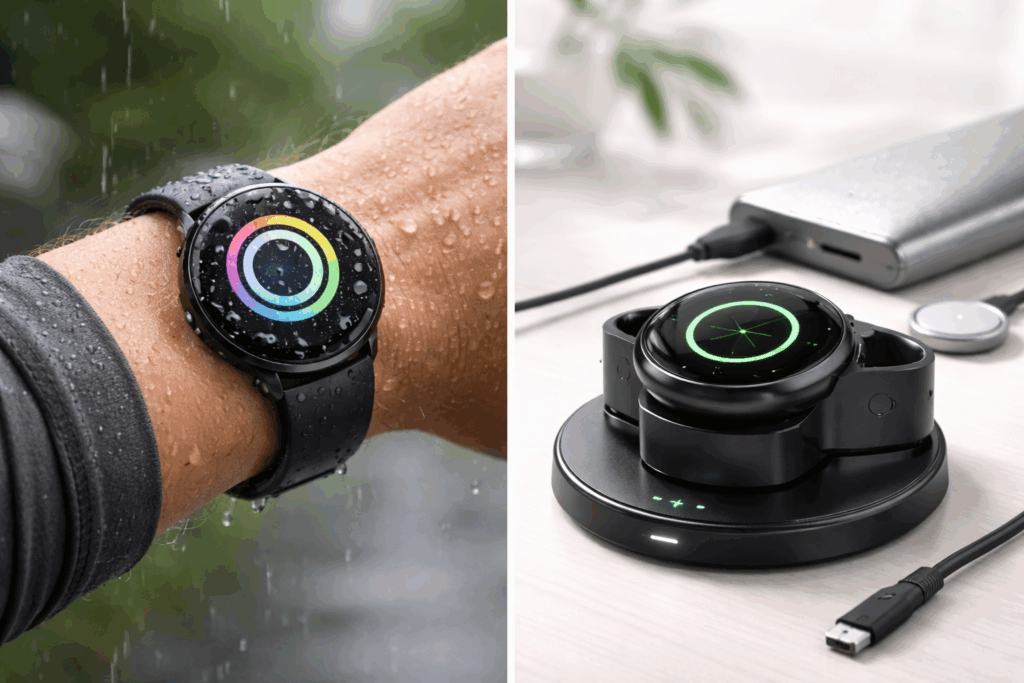
When diving into the realm of wearable fitness trackers, one must not overlook the critical aspect of durability. This isn’t just a mundane checkbox; it’s a cornerstone! Many models strut their stuff with materials crafted to brave the daily grind—think about those that flaunt impressive water resistance ratings, boosting their resilience against the elements. And let’s not forget devices clad in reinforced glass or sporting scratch-resistant surfaces; these warriors stand ready to combat the perils of accidental tumbles and rough-and-tumble handling.
Now, let’s pivot to charging options—the lifeblood of your tracking experience! Some sleek gadgets come equipped with nifty charging docks or magnetic connectors that make re-energizing feel almost effortless. Others embrace good old-fashioned USB cables, offering flexibility galore when it comes to powering up. As you navigate this decision-making maze, don’t skimp on evaluating charging times and battery life—after all, an extended battery lifespan can significantly cut down on those pesky recharging intervals, paving the way for a smoother user journey through your fitness adventure.
User Experience and Interface
An effective user interface stands as a cornerstone for amplifying the overall experience with wearable fitness trackers. Imagine devices that embrace intuitive navigation, enabling users to plunge into features without wading through endless tutorials! Crisp displays, touchscreens that respond like lightning, and menus that flow seamlessly contribute profoundly to user satisfaction. And let’s not overlook the charm of customizable watch faces and tailored dashboards—these personal touches cater to individual quirks, taking interaction with the device to exhilarating new heights.
But hold on—design isn’t just an afterthought; it’s pivotal in capturing user engagement. Think about it: screen readability under blaring sunlight or dim twilight, ergonomic shapes that cradle your wrist while you push through a workout, and the weight of the device itself—all these elements sway user acceptance dramatically. When functionality dances harmoniously with aesthetics? That’s how you draw in a kaleidoscope of users from every corner! Add comprehensive guides and responsive customer support into this mix, and voilà—the overall experience transcends expectations, empowering users to unlock every ounce of potential their fitness trackers have to offer!
Evaluating Usability and Design
When it comes to evaluating usability, one cannot overlook the pivotal influence of interface layout and functionality on the overall user experience. Picture this: a tracker that’s not just well-crafted but also brimming with intuitive navigation—users can glide through its myriad functions and features without breaking a sweat. Clarity is key here; information like heart rate, steps taken, and notifications should leap off the screen with ease, leaving no room for confusion. However, tread carefully! Some devices might boast an impressive array of capabilities, yet an overly intricate interface can trip up those who aren’t tech-savvy.
Let’s not forget about design elements—the physical characteristics of wearable devices matter immensely. Aesthetics play a crucial role in shaping user satisfaction because let’s face it: comfort paired with style can make or break daily wearability. Consider materials—silicone straps versus sleek metal options—they cater to varied tastes and preferences. Size, weight, water resistance—all these factors swirl together to enhance both utility and allure in fitness trackers. In the end, it’s this delicate dance between usability and aesthetic charm that ultimately defines whether a device aligns seamlessly with the diverse needs of its users.
| Device Model | Interface Features | Material | Weight | Water Resistance |
|---|---|---|---|---|
| Fitbit Charge 5 | Intuitive navigation, clear display | Silicone strap | 33g | Water resistant up to 50m |
| Apple Watch Series 7 | Touchscreen, customizable watch faces | Aluminum or stainless steel | 32g (aluminum) | Water resistant (up to 50m) |
| Garmin Venu 2 | Easy-to-use interface, bright AMOLED display | Fiber-reinforced polymer | 49g | Water resistant (up to 50m) |
| Samsung Galaxy Watch 4 | Rotating bezel, user-friendly shortcuts | Aluminum, Gorilla Glass | 30g (Bluetooth version) | IP68 rating (dust and water resistant) |
Integration with Other Devices
In the ever-evolving landscape of modern fitness, many sleek trackers emerge, effortlessly weaving themselves into a tapestry of devices that heighten both functionality and user delight. Picture this: compatibility with smartphones, tablets—oh!—and the big players in operating systems, allowing users to sync their fitness data without breaking a sweat! This seamless integration doesn’t just stop there; it spills over into popular fitness apps, unlocking a treasure trove of advanced analytics for tracking progress through time’s relentless march.
But wait, there’s more—a selection of these wearables dances gracefully with smart home systems and health monitoring tools. Imagine the richness of a fully integrated fitness ecosystem! Here lies connectivity that begets features like smart notifications—little nudges that keep you in the loop without derailing your workout flow. A tracker adept at navigating these interconnected realms not only amplifies convenience but also stirs an invigorated commitment to managing one’s health and wellness journey. So when consumers weigh their choices? The allure of brand ecosystems can tip the scales decisively!
Compatibility with Smartphones and Apps
Ah, the world of modern wearable fitness trackers! These ingenious devices are crafted to meld effortlessly with the ever-popular smartphone platforms we all know and love. Imagine this: whether you’re team iOS or an Android aficionado, syncing your data becomes a breeze—like magic! This harmonious dance of interoperability opens up a treasure trove of features just waiting to be explored.
But wait, there’s more! Beyond mere connectivity lies a rich tapestry woven from links to various fitness and health apps that elevate the user experience beyond imagination. Picture detailed insights bursting forth alongside personalized training plans meticulously tailored from the data these trackers gather. Users find themselves enveloped in a vibrant ecosystem where tracking goals feels almost effortless; progress visualization transforms into an art form!
And let’s not overlook that exhilarating thrill when achievements can be shared across social media platforms—a catalyst for motivation and community spirit among users! It’s like being part of an electrifying network where everyone thrives together on their wellness journeys.
- Seamless integration with popular smartphone operating systems such as iOS and Android
- Enhanced functionality through connections with specialized fitness and health apps
- Customizable notifications and reminders for workouts and health metrics
- Access to community features that allow for sharing achievements and challenges
- Real-time data syncing for up-to-date tracking
- Compatibility with a range of devices, including tablets and smartwatches
- Enhanced user engagement through gamification of fitness goals via app interfaces
Pricing Breakdown
When diving into the realm of wearable fitness trackers, grasping the intricate pricing landscape is absolutely essential. Oh, how prices can dance and fluctuate! They ebb and flow dramatically based on an array of factors—think features galore, brand prestige, and those extra bells and whistles that add to your experience. The crème de la crème? High-end models flaunt sophisticated metrics like ECG readings and integrated GPS capabilities, but beware: such luxury comes with a hefty price tag that might make your wallet weep.
Then there’s the mid-range sweet spot—a delightful balancing act between must-have features and budget-consciousness. These gems cater to those who want a touch of sophistication without breaking the bank. Meanwhile, let’s not overlook our budget-friendly options; though they may skimp on advanced functionalities, they still manage to deliver basic fitness tracking for those who prefer a more laid-back approach to their health journey.
But wait! Evaluating value isn’t merely about staring at that initial price sticker. No sir! Many manufacturers entice you further with subscription services designed to elevate functionality through app enhancements or cloud data storage—an alluring prospect for enthusiasts craving deep dives into their health stats. Sure, these recurring fees can inflate your overall expenditure like a balloon ready to pop; however, for some users seeking thorough insights into their wellness saga, it just might be worth every penny.
And let’s not forget about promotions—the hidden treasures in this shopping expedition! Discounts can open doors to affordability as savvy shoppers navigate sales events like seasoned treasure hunters on the lookout for premium devices at tantalizingly reduced prices. So gear up; it’s time to explore this vibrant market with eyes wide open!
Finding Value for Your Investment
When diving into the world of wearable fitness trackers, consumers ought to take a moment—no, several moments—to reflect on the features that truly resonate with their unique fitness aspirations and lifestyles. Each model dances to its own beat, flaunting an array of functionalities like heart rate monitoring, GPS tracking, and sleep analysis—all pivotal elements that can dramatically sway their perceived worth. It’s crucial to hone in on what matters most personally instead of getting swept away by brand names or price tags.
Now, let’s talk about longevity and reliability; these qualities are no mere afterthought! They’re key players in determining whether your initial investment will blossom into satisfying returns down the road.
As you weigh options against costs, it’s imperative for potential buyers to arm themselves with knowledge. Some seemingly budget-friendly choices might skimp on vital functions necessary for an effective workout journey. On the flip side, pricier models may boast advanced capabilities that warrant those extra bucks spent. Scouring through comparisons and expert reviews can illuminate the labyrinthine landscape of available trackers—guiding consumers as they sift through a sea of possibilities in this vibrant marketplace!
Customer Feedback and Ratings
User feedback is absolutely vital when it comes to evaluating the performance and dependability of those trendy wearable fitness trackers. Customers frequently underscore the significance of pinpoint real-time data accuracy, impressive battery life, and an intuitive user interface that captivates their attention. Ratings often shine a spotlight on how seamlessly these gadgets mesh with mobile apps and other tech marvels. A wave of satisfaction washes over many users when their expectations are met—often hinging on that smooth syncing experience with their smartphones.
Diving into reviews uncovers recurring themes about durability and comfort—a tapestry woven from countless consumer experiences! Many folks scrutinize how well these devices brave the daily grind, particularly during sweat-soaked workouts. Positive vibes usually emanate from customers who appreciate both the sleek design and user-friendly interface. On the flip side, complaints tend to swirl around issues like tracking inaccuracies or app navigation headaches, underscoring golden opportunities for brands to step up their game in response to user needs.
Analyzing User Reviews and Experiences
User reviews emerge as a treasure trove for potential buyers diving into the world of wearable fitness trackers. As they sift through these devices, customer feedback often brings to light the dazzling strengths and glaring weaknesses of various models. Users rave about features like real-time heart rate monitoring, sleep tracking that feels almost intuitive, and interfaces so user-friendly you’d think they were designed with you in mind. Yet, lurking beneath this praise are whispers of doubt—some reports cast shadows on accuracy, particularly when it comes to estimating calorie burn or counting steps.
Peering deeper into user experiences reveals another layer: the realm of customer service linked to these gadgets. Reviews frequently spotlight issues like device malfunctions that send users spiraling into frustration, syncing nightmares that feel never-ending, and battery lives that seem to dwindle far too quickly. The bright side? Many positive tales recount swift resolutions from helpful customer support teams ready to save the day! In contrast, negative encounters can breed exasperation and distrust. All these insights weave together a vivid tapestry for prospective users—a crucial guide not just for assessing how well these devices perform but also for evaluating the reliability of company support—ultimately steering their purchasing choices in one direction or another.
Conclusion
Choosing the perfect wearable fitness tracker is no simple task; it demands a thoughtful dive into your own unique needs and quirks. Each gadget out there boasts its own set of intriguing features—think battery life that ranges from marathon runner to sprinter, or user interfaces that can either charm you or leave you scratching your head in confusion. But wait! Before you leap, consider how well these gizmos play with your other devices. You want to ensure you’re squeezing every drop of utility from that sleek wrist companion. And let’s not forget about the price tag—finding something that fits snugly within your budget while still packing essential functions is key.
Customer reviews? Oh, they’re gold mines of wisdom! They illuminate the path to understanding just how each device performs in real-world scenarios, revealing both dazzling strengths and frustrating weaknesses. So, as you embark on this quest for the ideal tracker, remember: making an informed choice isn’t just smart; it’s crucial for boosting your fitness journey and ensuring that what you invest yields all those glorious benefits you’ve been dreaming of!
FAQS
What features should I look for when choosing a wearable fitness tracker?
Ah, the quest for the perfect wearable fitness tracker! When diving into this world of tech and wellness, keep your eyes peeled for an array of enticing features—think heart rate monitoring that pulses with precision, GPS tracking to map your adventures in real-time, sleep tracking that unravels the mysteries of your nighttime slumber. Don’t forget about battery life; you want something that won’t fizzle out on you after a day or two. Water resistance is another gem to consider if you’re prone to splashes or sweat-soaked workouts. And compatibility? Oh yes, ensure it dances harmoniously with your smartphone or favorite fitness apps!
How long do most fitness trackers last on a single charge?
Ah, the enigma of battery life! It’s like asking how far one can run before hitting fatigue—varies wildly by model! Generally speaking, most fitness trackers boast endurance ranging from 5 days to a whopping 14 days per charge. But beware—the duration hinges heavily on how you wield its features and what activities you engage in.
Are wearable fitness trackers compatible with all smartphones?
The majority of these nifty gadgets play nice with both iOS and Android smartphones—a match made in tech heaven! Yet still, don’t let excitement blind you; always verify specific model compatibility before making that leap into purchase territory.
How much should I expect to spend on a quality fitness tracker?
Now we’re talking dollars and sense! Quality comes at various price points; prepare yourself for ranges between $50 and $300 (or even more!) based on what bells and whistles tickle your fancy. Take time to reflect upon which features are non-negotiable for your lifestyle—that way you’ll uncover the sweet spot where value meets desire!
How can I assess the user experience of a fitness tracker?
To truly grasp user experience is akin to peeling back layers—delve into ease of use first; how intuitive is that interface staring back at you? Examine app functionality as well as overall design aesthetics—they matter more than you’d think. And here’s a golden nugget: dive deep into user reviews and ratings because nothing beats insights from those who’ve ventured forth before you in this digital realm!